





![How to Start a Siding Business: Full Step-by-Step Guide [2026]](https://images.ctfassets.net/3q1a0w8cwuwf/7A9pa9J6TUkZxMENZSEYGT/156fe5ff2b95f0cef1f7bab26222ffc2/283._how_to_start_a_siding_business__1_.png?w=1920&h=1080&q=85&fm=webp&bg=transparent)
If you’re thinking about starting your own siding business, now’s the time to turn your skills into a profitable business. This guide walks you through all nine steps you need to take to start your own venture, namely:
Get licensed
Create your siding business plan
Get financing
Register your business
Handle finances and accounting
Get your siding tools and equipment
Decide on your siding services pricing
Get siding business insurance
Market your siding company
We’ll also discuss how long it takes to start your company, how to find your first clients, the most common pitfalls to avoid, and much more!
Let’s dive right into it.
What Does a Siding Business Do?
A siding business is a company that specializes in installing, repairing, and maintaining the exterior of residential and commercial buildings.
The cladding, which is what the side of the building is called, serves both functional and aesthetic purposes. Whether it’s made from vinyl, wood, fiber cement, or aluminum, it’s supposed to protect the structure from the weather, enhance curb appeal, and improve insulation.
Here are the typical services a siding business offers:
New siding installation
Siding replacement
Repairs and maintenance
Custom trim and finishing
Insulation upgrades
A typical business model involves providing labor, materials, and expertise for each project, charging either per square foot or per project. Most businesses also work with general contractors and home builders to secure ongoing work.
How Do You Start a Siding Business?
Ready to build a solid foundation for operations, finances, and marketing?
Here are the steps you need to take:


Now, let’s see what they entail.
1. Get licensed
Before you start building your siding business, you need to get licensed.
Even though not every state requires a license to operate, there’s a limit to the size of the projects unlicensed siding businesses can handle.
So before you tackle this, check out each state’s license requirements.
If you do want a license, you must:
Register your business
Pass a trade or business exam
Provide proof of insurance
Submit an application
Getting licensed can take a few days to several weeks, depending on your location and how ready you are with the documents. Make sure to start the process early to avoid delays.
2. Create your siding business plan
A business plan is your roadmap to launching and growing your siding business successfully. In short, a well-thought-out plan defines your goals and helps you stay on track.
Here’s a breakdown of what your siding business plan should include:
Services offered: Think about if you’ll focus on vinyl, wood, fiber cement, etc., and what type of services you’ll offer (replacement, repair, or installation).
Target market: Define your ideal customers—homeowners, real estate investors, property managers, etc.
Business goals: Make sure to add short-term goals (e.g., get 10 clients) and long-term goals (e.g., expand to multiple regions).
Marketing plan: Outline how you’ll attract and convert customers, from online advertising to direct mail.
With a solid business plan, you ensure you stay on track and easily adapt to market changes.
3. Get financing
The next step is securing the right finances, which is the capital you need to cover startup costs such as tools, vehicles, insurance, licensing, and initial marketing.
Even if you start small, having funds available for early expenses will help you launch smoothly and take on projects without stressing over money.
Here’s a list of your financing options:
SBA loans: Small Business Administration (SBA) loans are government-backed loans with competitive rates and longer repayment terms.
Bank loans: The only downside is that they come with high interest rates and stringent qualification requirements, so save this as a last resort.
Personal savings: If you have money saved, use your own capital or bring in partners (such as family and friends who believe in your business).
Grants: Certain states offer grants for small businesses, though it’s very hard to get one due to high competition.
Equipment financing: This strategy allows you to spread the cost of tools, vehicles, and machinery over time while using the equipment right away.
In general, lenders look for a solid business plan with realistic financial projections, good personal credit history, and evidence of industry experience or relevant skills.
Being ready from the start will improve your chances of securing the financing you need.
4. Register your business
After you’ve created your business plan and feel confident in the results, it’s time to register your siding business. This will make your company official and legal, allowing you to operate within the law but also building trust with customers, suppliers, and lenders.
So, go ahead and think of a name that’s professional, easy to pronounce and remember, and not already in use.
After you’ve got your name, decide on your business structure:
Solo proprietorship: While it’s simple to set up, you have no personal liability protection.
LLC (limited liability company): A popular option that separates your personal and business assets while keeping taxes flexible.
Corporation: Provides liability protection but comes with reporting and more formalities.
Once you’ve chosen the business name and structure, go to the Secretary of State’s office or local business authority and start the registration process. In addition, you might need to apply for an EIN (Employer Identification Number) from the IRS, which is needed for taxes, hiring employees, and opening a business bank account.
The #1 newsletter for the trades.
5. Handle finances and accounting
It’s critical to open a business bank account because it’ll protect your business and personal assets. Besides, organized finances are the backbone of a healthy siding business. Without a clear record, it’s easy to lose track of expenses, miscalculate profits, and run into tax trouble.
To set up a solid financial system from day one, here’s what you can do:
Opening a business bank account
A dedicated business bank account keeps your personal and business finances separate, which is ideal for accurate bookkeeping, professionalism, and legal protection.
The opening is pretty straightforward, as you just have to choose a bank that offers small business accounts, bring the documents, and make the initial deposit.
The benefits are simple:
Simplifies tax filing
Easier to track expenses
Creates a clear financial history
Setting up accounting
Using a reliable accounting system like QuickBooks, Xero, or ServiceTitan to track revenue, expenses, and job profitability is essential in ensuring accurate financial records, compliance with all tax regulations, and better decision-making.
With the ServiceTitan Accounting tool, you can automate day-to-day accounting tasks like invoice generation or payment collection, gain accurate financial insights, and take control of your cash flow from a single dashboard.


Getting these functions in place early ensures you stay compliant, avoid costly errors, and always have a clear picture of your company’s financial health.
6. Get your siding tools and equipment
If you want to do siding work efficiently and safely, then you need the right tools and equipment. You need to invest in durable, professional-grade gear that reduces downtime and minimizes costly replacements in the long run.
Essential siding tools include:
Circular saw or siding-specific saw
Utility knives and snips
Levels, chalk lines, and measuring tape
Scaffolding or ladders
Nail guns or pneumatic staplers
Safety equipment like gloves, harnesses, and protective eyewear
There are three ways to get the right tools and keep startup costs manageable: purchase them outright, finance them through equipment loans, or rent specialty gear. Look for reputable suppliers and choose tools that scale with your business as you tackle larger projects.
To further improve job-site efficiency, consider ServiceTitan’s Field Service App, a tool that empowers field technicians with all the relevant customer and project information even before they get to the site.

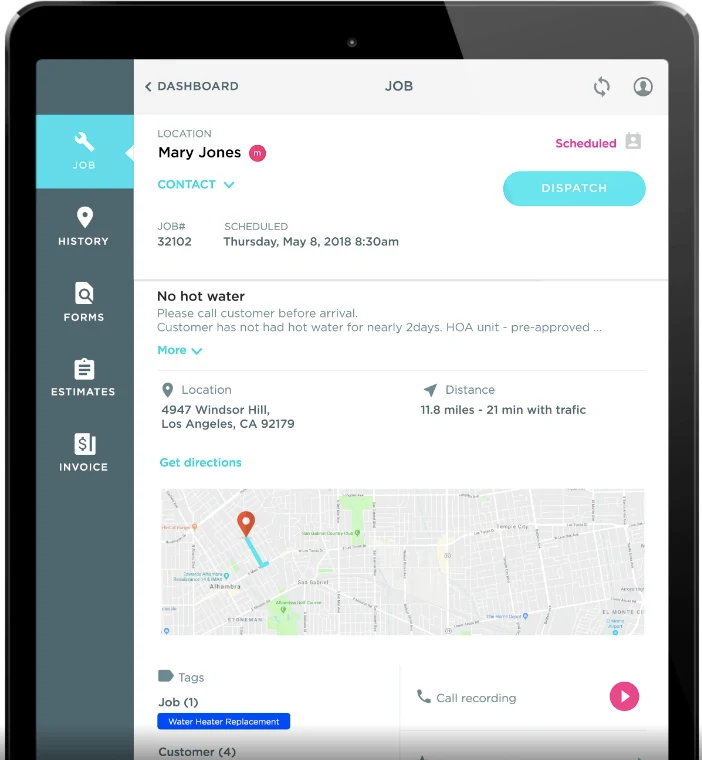
Customer names, addresses, contact info, estimates—the app has it all. In addition, your team can access customer profiles, prior invoices, photos, and voice notes to better recognize a loyal customer.
Inventory management
One more important thing to do is to keep track of your tools and materials. This helps siding businesses avoid delays, reduce waste, and prevent costly losses.
You might think a checklist is enough for a small siding business, but with an inventory solution like ServiceTitan’s Contractor Inventory Management Software, you can streamline your entire inventory workflow, increasing accuracy, saving time, and improving efficiency.


You can also organize items in trucks and warehouses to improve inventory management and achieve faster turnaround times; in short, you’ll know exactly where your inventory is at any point in time.


7. Decide on your siding services pricing
The secret to a solid pricing strategy is to account for material costs, labor rates, overhead, and the desired profit margin (typically between 10 and 35 percent).
The point is, you need to be competitive enough to win jobs while maintaining a healthy profit margin. You can start by researching local market rates to see what other siding businesses like yours charge for similar services. Make sure to add your own unique value, such as premium materials or extended warranties, that justify the higher pricing.
To make pricing easier and accurate, ServiceTitan’s Pricebook Pro is the best tool for the job.
It shows regional pricing averages for your services so you can see exactly where you stand among competitors. Moreover, you get data-backed recommendations to help you make better decisions, as well as explainer PDFs your technicians can use to communicate value.


You can also build estimates that are competitive and profitable, ensuring you maintain transparency with your customers. It’s also simple to regularly review and adjust your prices, so you can keep pace with market trends.
8. Get siding business insurance
Securing insurance for your siding business isn’t just a passing fancy but a vital safeguard that protects you from financial losses due to accidents, property damage, or legal claims.
Operating without insurance can expose you to costly lawsuits or fines. Plus, it builds trust with your customers, as not many are interested in hiring contractors who don’t have insurance.
Here are some must-have insurance policies a siding business should have:
General liability insurance: Covers property damage or injuries that occur on the job site.
Workers’ compensation insurance: Required if you have employees, to cover medical expenses.
Commercial auto insurance: Protects vehicles used for business purposes.
Investing in the right type of insurance keeps you compliant with local laws and builds trust with clients who want to hire responsible contractors.
9. Market your siding company
Effective marketing is key to growing your siding business by attracting local clients, combining both digital and offline strategies to reach a wider audience.
Online marketing focuses on strategies like creating a professional website, optimizing for local SEO, and leveraging platforms like Google Business Profile to engage potential clients.
Meanwhile, offline marketing refers to distributing flyers, networking at local events, and partnering with local businesses to generate referrals.
While it sounds like hard work, ServiceTitan’s Home Services Marketing Software makes it pretty straightforward. It’s a powerful tool for attracting new customers, tracking real-time campaign data, and measuring ROI. This is very important for siding businesses because it helps you adjust strategies on the fly and focus on channels that produce the best results.

In the paragraphs that follow, let’s talk about the top strategies to market your siding business.
Get a website
Designing a professional website is a must for any siding business. Think of it like your business card, serving as an online storefront and often being the first impression a potential customer gets of your company.
A well-designed site also builds credibility, showcases your expertise, and makes it easy for customers to contact you.
Every siding business website should have the following pages:
Services with clear descriptions
Contact information for inquiries
Testimonials or reviews to build trust
Additionally, make sure your website is mobile-optimized, as many clients search for siding businesses on their phones. A fast, easy-to-use site improves user experience and helps you rank better with search engines.
List your siding business
A powerful and surefire way to boost visibility and drive online traffic is to list your siding company in local online directories like Yelp, Google Business Profile, and Angi. Doing so helps potential homeowners or property owners find trusted contractors in their area and read reviews.
Moreover, listing your business on these platforms improves your search engine rankings, making it easier for people to discover your business when searching for local siding services. It also builds trust since you add verified contact information, photos of your work, and social proof.
Run Local Services Ads
Generate qualified leads by putting your siding business at the top of local search results via Google Local Services Ads. What’s great about them is that they appear with a ‘Google Guaranteed’ badge, building trust and encouraging potential customers to contact you directly.
It’s a highly effective way to market your business because you only pay for leads. Just set up a budget and select the service areas you want to target to attract those ready-to-hire customers.
If you think this is too much hassle, don’t worry. ServiceTitan’s Marketing Pro – Ads tool helps you optimize your Google Ads campaign for revenue and uncover wasted ad spend.


You also get better insights into each campaign’s ROI.
Leverage email marketing
An excellent method to stay connected with past and potential siding clients is email marketing, which lets you share promotions and updates, follow up on leads, and send helpful content.
In a nutshell, email marketing helps keep your business at the top of mind even after a job.
With ServiceTitan’s Marketing Pro – Email tool, you can easily identify target audiences, design emails quickly through professional templates, automate campaign scheduling, and track your ROI from one place.


With hyper-targeted campaigns, you can create messaging that resonates with your audience, which can equate to higher open rates, more calls, and ultimately more booked jobs.
Embrace social media
Another good way to promote your siding business and connect with your local community is to use social media platforms like Facebook, Instagram, or TikTok.
They’re amazing for sharing photos and videos of completed projects or siding business tips to educate clients and position your brand as an expert in the field.
You can also engage with followers by responding to comments and answering questions, and build your brand presence by joining neighborhood groups where potential clients seek recommendations.
That’s not all—you can run targeted ads on these channels to boost your reach and bring in qualified leads in your area.
Be mindful of SEO
Local search engine optimization (SEO) is critical for ensuring your siding business shows up when potential customers search online in your area.
Some basic SEO practices include using relevant keywords like ‘siding installation near me’ or ‘siding services in [city],’ or optimizing your site’s meta titles and descriptions.
These steps help search engines understand what services you offer and where you operate, improving your chances of ranking higher in local search results and of homeowners choosing your siding company over competitors.
Manage your online reputation
Online reviews can make or break your siding business’s reputation and influence other people’s opinions on whether they want to hire you. If not handled properly, negative reviews can harm your brand, while positive ones build trust and credibility.
After every completed job, encourage happy customers to leave honest reviews by sending an SMS or asking politely. You can even offer something small as an incentive, like a discount on future jobs.
The secret to handling negative reviews is to respond promptly and professionally to them, without adding feelings into your response. It shows that you care and are willing to resolve their problems quickly.
Simplify reputation management with ServiceTitan’s Marketing Pro – Reputation feature.
With it, you can increase visibility and trust with more five-star reviews and manage them from one place. You’ll get insight into which jobs, customers, and technicians are driving positive or negative reviews.
How Long Does It Take to Start a Siding Company?
The answer depends on your location, business model, and how prepared you are.
Typically, it takes between four and 12 weeks, a timeline which includes a few key steps, such as registering your business, getting licensed, obtaining insurance, and setting up your operations.
Here are some factors that influence how long the process takes:
State licensing requirements: Some states have lengthy approval processes. Two to eight weeks, in places, depending on how quickly you can complete the required exam.
Financing and capital readiness: Funds you already have available to purchase equipment.
Experience level: Skilled installers can launch faster than those needing training.
Crew hiring: Recruiting and onboarding reliable workers can take time.
When Is the Best Time to Start a Siding Business?
The ideal time to start a siding business is in late winter to early spring because it gives you enough time to set up operations before peak season.
In most regions, warmer months are ideal for siding work. Usually, heavy snow and cold temperatures can slow projects down. On the other hand, work can be profitable all year in countries with milder climates.
Make sure to also take trends into consideration. Most homeowners plan exterior renovations in the spring to boost curb appeal, so be ahead of this demand to build momentum and fill your schedule before competitors.
How Do I Find My First Siding Clients?
Getting your first siding clients might seem an insurmountable hurdle, but there are a few proven approaches that help you jump-start your customer base:
Leverage your personal network: This means reaching out to friends, family, and neighbors, and asking them if they know someone who needs siding services (or if they need it themselves). Word-of-mouth referrals can go a long way.
Build an online presence: Create a simple Google Business Profile to improve your visibility in local searches or a website to showcase your services, past work, and contact information.
Attend local events and join community groups: Participate in home improvement expos or neighborhood fairs to expand your network and meet potential clients face-to-face.
Use flyers and local advertising: Flyers are easy and cheap to make, and you can distribute them in targeted neighborhoods for quick exposure and brand awareness.
What Are the Benefits of Starting a Siding Company?
The advantages of starting your own siding business are:
Flexibility: Running your own business lets you set your schedule, and you have the liberty to choose the projects you take on, giving you greater balance over your life and work.
Low startup costs: Siding is not a resource-heavy job compared to other construction trades. Equipment and tools are affordable, making it easy to launch your company without a massive upfront investment.
High demand: Homeowners constantly need siding installation and repair, providing a steady stream of jobs and customers.
Potential profitability: Siding businesses can generate solid profit margins and long-term growth opportunities, as long as they have proper pricing, efficient operations, and a strong marketing strategy.
What Are Common Mistakes When Starting a Siding Business?
Siding businesses can be profitable, but some entrepreneurs stumble over avoidable mistakes, such as:
Underestimating startup costs: Failing to budget properly for tools, insurance, and marketing can leave you financially strained early on.
Poor marketing strategy: Relying solely on word-of-mouth or ignoring the importance of building an online presence can limit your ability to attract new clients.
Lack of proper insurance: Operating without the right coverage can expose you to costly lawsuits in case of accidents.
Neglecting training and certifications: Without proper skills or accreditations, the quality of your work will suffer.
Ignoring financial management: Mixing personal and business finances or neglecting bookkeeping leads to cash flow issues.
Skipping licenses: Running a business without the necessary licenses risks fines and legal trouble.
How Can You Grow a Siding Business?
Growing your business requires a blend of smart marketing and strategic planning. Here are some best practices to help you expand and boost profitability over time:
Expand your services: After your business is established, try to add complementary offerings like gutter installation or window replacement to attract more customers.
Hire skilled help: Bring on experienced crew members who let you take on more projects while maintaining quality work.
Adjust pricing strategically: Try to regularly review your prices based on costs, market trends, and the value you provide, to maximize profit.
Improve marketing efforts: Invest in both digital and traditional marketing strategies to generate steady leads. ServiceTitan is a great tool for tracking campaigns and ROI.
Build a strong reputation: Using platforms like ServiceTitan, focus on delivering excellent service, collecting reviews, and nurturing client relationships to earn referrals.
Over to You
Starting a siding business is an exciting and profitable opportunity, but it does require careful planning to make it work properly. Use this guide to help you understand how to secure finance, how to build a marketing strategy, and what common pitfalls to avoid.
ServiceTitan is software designed to make the lives of siding contractors easier. By streamlining reputation management, finances, and inventory, ServiceTitan helps siding companies improve efficiency, increase customer satisfaction, and grow their businesses.


ServiceTitan Software
ServiceTitan is a comprehensive software solution built specifically to help service companies streamline their operations, boost revenue, and substantially elevate the trajectory of their business. Our comprehensive, cloud-based platform is used by thousands of electrical, HVAC, plumbing, garage door, and chimney sweep shops across the country—and has increased their revenue by an average of 25% in just their first year with us.


