
Templates Guides
Plumbing Installer Job Description [+ Free Template]
 Plumbing
November 2nd, 2026
ServiceTitan

A plumbing installer job description template is a ready-to-use outline that defines the role, responsibilities, and qualifications for a plumbing installer position at your business.
It gives hiring managers a starting point that’s specific to installation work, rather than a generic plumber job description that blurs installers together with service technicians or apprentices.
Using a clear, role-specific template helps attract candidates who are the best fit for the job and sets clear expectations on scope, licensing, and day-to-day duties.
The key components of a plumbing installer job description include:
A clear role summary distinguishing installation from service or repair work.
Core duties such as reading blueprints, installing pipes and fixtures, testing systems, and following code.
Required skills, both technical and physical.
Education, experience, and licensing requirements.
Salary expectations.
The rest of this guide breaks down each of these in detail. You can also use the form on the right to download our free, ready-to-use template and adapt it to your needs.
What Is a Plumbing Installer?
A plumbing installer puts in the pipes, fixtures, and appliances that make a building’s water and drainage systems function. Such work includes:
Running supply and waste lines
Setting toilets and sinks
Installing water heaters
Hooking up dishwashers and washing machines
This is new-build work, not repair work. Installers spend their days on new construction, remodels, and additions, working off blueprints and manufacturer specs rather than troubleshooting what’s already there.
Once the fixtures are set and the system’s roughed in, their job is done. A service plumber gets the callback when something leaks or corrodes two years later.
Where an installer works and what they’re allowed to do depend on the employer and local regulations. Some shops split installers entirely between residential and commercial work, since commercial jobs (bigger pipe sizes, trickier venting, and code requirements that shift with occupancy type) require a different skill set than a single-family rough-in. Other companies just cross-train everyone.
In terms of pay, the median annual wage for plumbers, pipefitters, and steamfitters was $63,800 in May 2025, or $30.67 an hour, according to the Bureau of Labor Statistics.
The #1 newsletter for the trades.
Plumbing installer vs. service plumber
Installers show up to build, while service plumbers show up for preventive maintenance or because something’s broken in what’s already built.
An installer works from blueprints and specs, setting fixtures and running pipe on a schedule that’s tied to the construction timeline.
A service plumber usually walks into a house with no idea what they’ll find (a clogged line, a failed water heater, a leak behind a wall) and has to diagnose it on the spot.
That said, plenty of plumbing companies, especially smaller ones, don’t separate the two roles at all. A plumbing technician might rough in a bathroom on Monday and snake a drain on Tuesday.
Larger residential and commercial shops are more likely to specialize, since installation and service work can involve different workflows, tools, and licensing requirements.
Plumbing Installer Duties and Responsibilities
Use the breakdown below to decide which of these responsibilities apply to the job you’re hiring for and how much detail to include in each.
Install pipes, fittings, and fixtures
This is the core of the job: running supply and drain lines, cutting and joining pipes, and setting fixtures like toilets, sinks, tubs, and water heaters. Depending on the project, that also means installing gas lines, sump pumps, or backflow preventers.
If your installers work on both residential and commercial jobs, make sure to specify that. Commercial rough-ins involve larger pipe diameters, more complex venting, and stricter inspection requirements than a typical house.
Read blueprints and installation specifications
This means reading architectural and plumbing drawings to figure out pipe routing, fixture placement, and connection points before work starts.
It also means catching problems early, like a wall that’s too thin for the specified pipe or a fixture location that conflicts with framing, before they turn into costly rework.
If your successful hire will be expected to use specific software or drawing formats, be sure to note that here.
Test installed plumbing systems
Once a system’s roughed in or a fixture’s set, test it before signing off. That includes pressure-testing supply lines, checking drain slope and flow, and confirming there are no leaks at joints and connections.
This step is also what gets a job through inspection, so mention explicitly if your company holds installers accountable for passing inspections on the first attempt.
Follow plumbing codes and safety requirements
Every installation has to meet local building codes, whether that’s the International Plumbing Code (IPC), the Uniform Plumbing Code (UPC), or a jurisdiction’s amended version of either. That covers pipe sizing, venting, fixture clearances, and materials.
Safety requirements apply on top of that:
Proper handling of tools and equipment
Safe trenching practices
Awareness of hazards like confined spaces or gas lines
If your company requires specific certifications (OSHA 10, for example), list them as a qualification.
Coordinate with customers and other trades
Installers rarely work in isolation. On a construction site, plumbing rough-in must happen in sequence with electrical and HVAC, so installers need to coordinate timing and access.
On smaller remodel jobs, they may well have to interact directly with homeowners, explain what they are installing, and flag issues that affect the timeline or budget.
If customer service and communication skills matter for the role at your company, highlight them, since they impact the kind of candidate you’re looking for.
Essential Plumbing Installer Skills
While duties describe what the job involves, skills are what make someone effective at it. A candidate can’t fulfill their responsibilities without the underlying capabilities to back them up.
Pipefitting and joining techniques
Cutting, threading, soldering, and gluing pipe are foundational skills, but the specific methods matter. A candidate comfortable with PEX crimping might have never sweated a copper joint.
If the job you’re advertising involves a particular material or method, then say so, rather than just asking for ‘general plumbing experience.’
Blueprint and code literacy
Reading a drawing and knowing what it means for actual pipe placement are two different skills. A strong candidate can look at a set of plans and immediately spot where code requirements, clearances, venting, and fixture spacing will affect the installation.
This is the skill that prevents rework, and it calls for more than just the ability to follow instructions.
Manual dexterity and physical stamina
Installation work can involve crawling through tight spaces, working overhead, lifting fixtures and equipment, and staying on your feet for a full shift.
Fine motor control matters too: joining pipes cleanly and setting fixtures without damaging finishes—both take a steady hand.
Problem-solving on the spot
When plans don’t match what’s in the wall, installers may need to adapt them as they work. A good installer adjusts when the stud is misplaced or the rough-in doesn’t align with the shipped fixture.
This task requires different skills than diagnostic troubleshooting or repairing already broken pipes.
Attention to detail
A missed slope on a drain line or a loose connection doesn’t show up until the system’s under pressure or in use, sometimes after the drywall’s closed up. Installers who catch their mistakes before inspection save the company money and protect its reputation with builders and clients.
Communication
Beyond direct client communication, installers need to coordinate with other trades, general contractors, and their crew. Miscommunication about timing or access is one of the most common causes of installation delays on multi-trade jobsites.
Plumbing Installer Education, Experience, and Licensing
Education requirements for plumbing installers are usually light. A high school diploma or GED covers most entry-level postings, since the actual training happens on the job or through an apprenticeship program.
Some employers prefer candidates who’ve completed a trade school or technical school program covering basic pipefitting, blueprint reading, or code fundamentals, though it’s seldom a requirement.
Experience expectations vary more by company than by industry standard. Entry-level roles might accept someone straight out of an apprenticeship, while a lead installer position on commercial jobs could require several years of hands-on rough-in experience.
Make sure you’re specific about what ‘experience’ means in your posting. Does it mean, for example, years on the job, specific systems worked on, or a residential versus commercial background?
Licensing is where employers often get it wrong by assuming one state’s rules apply everywhere. However, requirements can vary significantly by jurisdiction.
Some states license installers separately from journeyman or master plumbers, some let installers work under a licensed plumber’s supervision without their own credential, and local municipalities can add requirements on top of state law.
Plumbing license requirements vary enough from state to state that it’s worth confirming your local rules before finalizing a posting, rather than copying language from a template built for a different state.
New York’s licensing structure, for example, looks significantly different from requirements in states without citywide licensing boards.
How Does ServiceTitan Help Plumbing Installers?
Hiring the right installer is just the beginning. What happens after they’re onboarded determines whether they pay off in the long run.
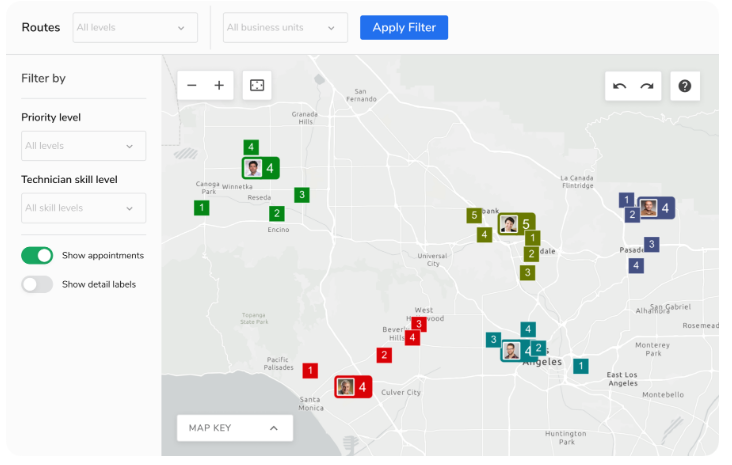
ServiceTitan’s plumbing software gives businesses greater visibility into installer performance, scheduling, and job progress. Its dispatch board and GPS tracking let managers assign installers to jobsites and see where techs are in real time.

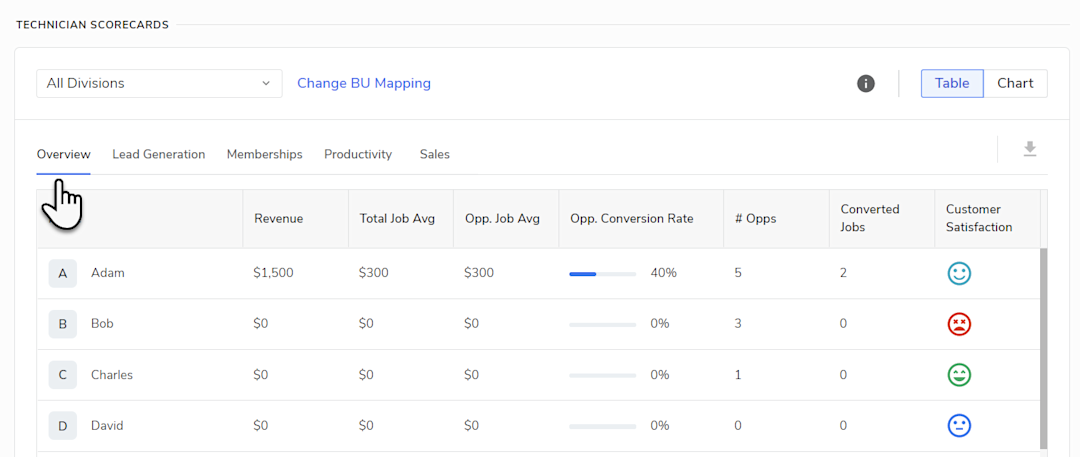
Technician performance dashboards and scorecards provide another way to evaluate installers after onboarding. Metrics such as callback rates, job completion times, and other performance indicators help managers identify installers who are ready for more complex work and those who may need additional support.
Over time, this creates a clearer picture of which techs consistently complete work to the expected standard.

And thanks to job tracking and real-time status updates from jobsites, the office is always informed about what is happening in the field. Instead of waiting for an end-of-day call, managers follow job progress and respond when an installation encounters a problem or needs to be rescheduled.
For projects with multiple installers or tight construction timelines, this visibility can make it easier to keep work moving and communicate changes to customers or other contractors.
Over to You!
A detailed plumbing installer job description sets clear expectations for scope, licensing, and what success looks like in the role. Use the template above as your starting point, then adjust it to match your state’s licensing rules and the specific work your installers handle.
Once you’ve made the hire, book a ServiceTitan demo to see how easy it can be to manage your team’s day-to-day work.
ServiceTitan helps plumbing contractors manage installation workflows, meet compliance requirements, and improve operational efficiency while providing a better customer experience.


Frequently Asked Questions (FAQs)
Here are answers to the questions employers ask most often when hiring for this role.
Q1. Can an apprentice work as a plumbing installer?
In most states, yes, though apprentices typically cannot perform plumbing installation work independently. They generally work under the supervision of a licensed plumber.
Supervision ratios and allowed tasks vary by jurisdiction, so check your state’s licensing board before assigning an apprentice solo installation work.
ServiceTitan also provides plumbing trade school resources for all 50 states (e.g., New York) to help aspiring plumbers understand local training and licensing requirements.
Q2. What tools does a plumbing installer typically use?
Installers rely on pipe cutters, wrenches, soldering equipment, PEX crimpers, levels, and pipe threaders, along with power tools for cutting and drilling.
The exact toolkit depends on the materials and systems your company installs. See ServiceTitan’s guide to plumbing tools for a full breakdown.
Q3. How much plumbing experience should an installer have?
There’s no universal standard. Entry-level roles can work for recent apprenticeship graduates, while lead installer positions on commercial jobs often require several years of hands-on experience.
It’s best to base your requirement on the complexity of the work, rather than a generic industry number.
Q4. What interview questions should you ask a plumbing installer?
Ask about specific past projects, materials and methods they’ve used, and how they’ve handled a rough-in that didn’t match the plans.
Questions around real scenarios reveal more than generic prompts like ‘Tell me about yourself.’
Q5. How can employers assess a plumbing installer’s technical skills?
A practical test, like cutting and joining pipe, reading a sample blueprint, or walking through a mock rough-in, shows more than a resume can.
Pairing that with a code-knowledge question or two helps confirm the candidate can really apply the technical knowledge they claim to have.
